
Commercial Roofing Services
Storm Damage Roof Repair in Winston-Salem, NC
Storm Damage Repair for Commercial Roofs in Winston-Salem
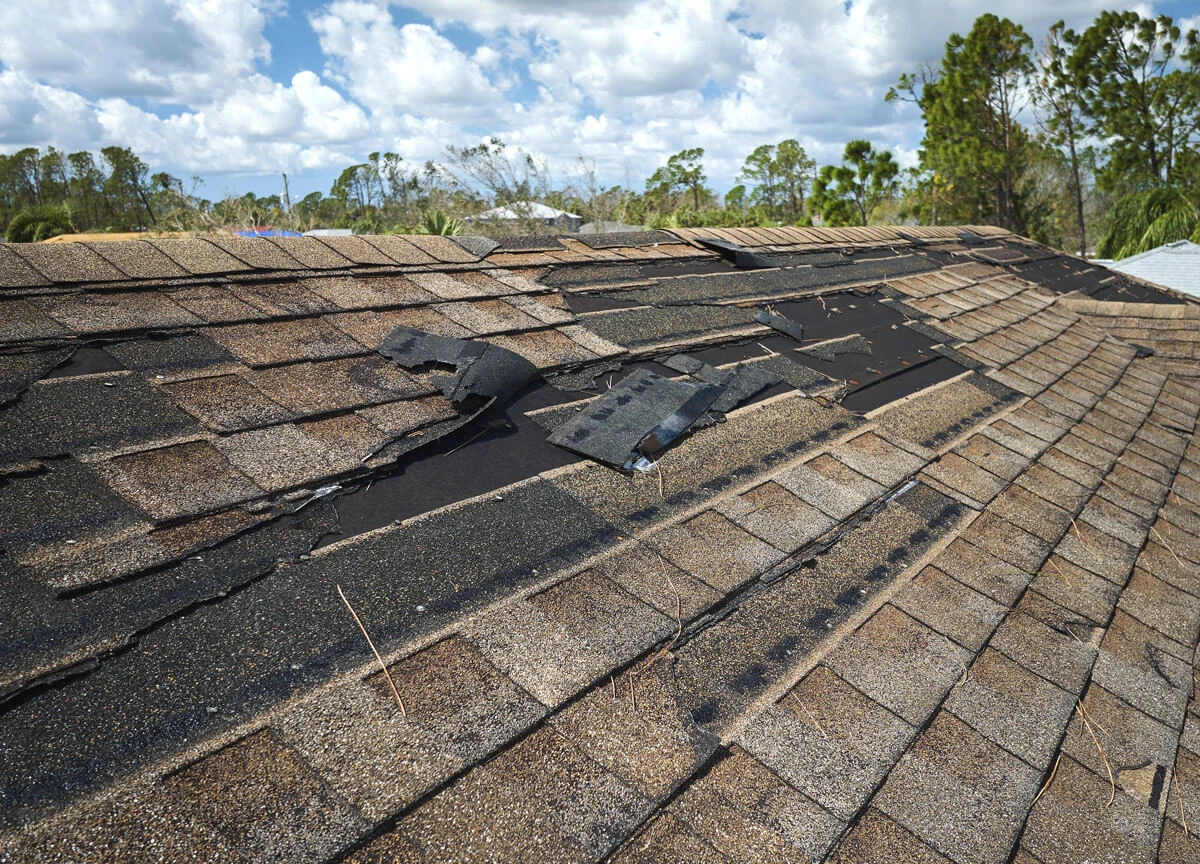
The Piedmont gets hit by two very different storm mechanisms in the same calendar year, and they damage roofs in different ways. Fast, high-wind summer thunderstorms can lift edge metal, tear membrane at fastening points, and drop hail on metal or single-ply roofs. Hurricane remnants tracking inland later in the season bring less wind but much more sustained rain, which finds every weak drain and marginal flashing detail a roof has. Our storm repair process assesses for both damage types rather than assuming one and missing the other.
Assessing Wind Damage
Wind damage on a low-slope commercial roof often starts at the edges, coping and edge metal are the first things a sustained gust gets under, and once edge metal lifts, the membrane behind it is exposed to further peeling. We check every parapet and roof edge after a wind event, along with rooftop equipment for shifted or loosened curb flashing, before assessing the field of the roof itself. On metal roof systems, which cover a fair number of the manufacturing buildings in this market including facilities around Tobaccoville and the industrial corridors near Kernersville, we check panel seams and fastener pull-through, since metal roofing fails differently than membrane systems under wind load.
Assessing Hail Damage
Hail impacts on single-ply membrane can bruise the material without an obvious puncture, which means damage isn't always visible on a surface walk. We check for granule loss on modified bitumen and cap sheet systems, and we inspect rooftop equipment housings and metal flashing for dents, which are often a more reliable indicator of hail size and impact force than the membrane itself. On metal roofing, hail denting is usually visible directly on the panels.
- Edge metal and coping checked for lift or separation at every parapet
- Membrane field inspected for wind-driven tears near fastening rows
- Hail impact assessed via granule loss, membrane bruising, and metal denting
- Rooftop equipment curbs and flashing checked for wind or impact damage
- Drainage system checked for debris blockage from storm-driven material
- All findings photographed and logged with date and estimated storm correlation
Hurricane Remnant Rainfall and Drainage Failure
By the time a tropical system reaches Forsyth County it's typically a tropical depression or post-tropical remnant, but the rainfall totals can still be significant and sustained over many hours. Roofs with adequate drain capacity handle this without issue; roofs with even minor existing drainage problems, a partially clogged scupper, a low spot with a couple inches of standing water under normal conditions, can see that water back up and find its way past flashing that would hold under lighter rain. Our post-storm inspection checks drainage function specifically, in addition to membrane condition, because rain-driven damage often traces back to a drainage issue rather than membrane failure.
Repair to Manufacturer Specification
Storm repair work follows the same manufacturer-spec requirement as any other repair on a roof under warranty, matching membrane type, using approved fastening patterns, and in some cases coordinating with the manufacturer's approved contractor process if the warranty requires it. We don't cut corners on storm repairs just because the timeline feels urgent; a repair that voids a warranty to save a day of scheduling costs the owner far more later.
Documentation for the Claims Process
Storm damage repair documentation is built with the insurance claims process in mind from the first site visit: dated photos correlated to the storm event, a written damage assessment separating pre-existing wear from new storm damage, and itemized repair scope. We provide this record to the owner or their adjuster as factual documentation, what we found and what we repaired, without making representations about claim approval, which is the carrier's determination based on the policy.
Repair Scheduling After Widespread Storm Events
After a storm that affects multiple properties across the region, we prioritize active leaks and life-safety concerns first, then work through the remaining queue by severity. We give property managers a realistic timeline based on actual workload rather than promising immediate response to every site simultaneously.
Repairing Metal Roof Systems After Storm Impact
Metal roofing common on manufacturing and distribution buildings in this market fails differently than membrane roofing under storm load. Panel seams can separate under wind uplift even when the panels themselves are undamaged, fasteners can back out or shear under repeated flex, and hail denting, while usually cosmetic, can concentrate stress at panel ribs over time if left unaddressed. We inspect fastener condition and seam integrity across the full panel run, extending beyond the visibly damaged section, since a storm event significant enough to damage one area typically stressed the whole roof plane.
Storm Damage Repair Questions
How do you tell storm damage apart from ordinary wear?
We document condition at every inspection and compare new findings against prior records where available, and we correlate damage patterns, wind-direction-consistent edge lift, hail-pattern denting, to the specific storm event date.
Does hail damage always show up as visible punctures?
No. Hail can bruise single-ply membrane without puncturing it, so we also check granule loss, metal flashing dents, and rooftop equipment housings, which often show impact more clearly than the membrane surface.
Why does a hurricane remnant with lower wind speeds still damage roofs?
The sustained heavy rainfall from a weakening tropical system can overwhelm marginal drainage that lighter rain wouldn't affect, so damage from these events is often drainage-related rather than wind-related.
Will storm repair work be done to manufacturer specification?
Yes, storm repairs follow the same manufacturer-spec and warranty-preservation process as any other repair work, including manufacturer-approved contractor requirements where the warranty calls for it.
What records do I get for an insurance claim?
Dated photos tied to the storm event, a written assessment distinguishing new damage from pre-existing wear, and an itemized repair scope, provided as factual documentation for the claims process.