
Roof Systems
SBS Modified Bitumen Roofing in Winston-Salem, NC
SBS Modified Bitumen for Legacy Manufacturing Roofs Across the Triad
SBS modified bitumen remains a common replacement specification for aging built-up roofs on the manufacturing and warehouse buildings scattered through the tobacco and furniture-era industrial stock around Winston-Salem. We specify it where the building's roof structure and owner expectations favor a proven asphalt-based system over a single-ply alternative, and we document that reasoning in the file rather than defaulting to it out of habit.
Why legacy buildings still specify modified bitumen
Large-footprint manufacturing buildings connected to the area's tobacco and furniture manufacturing history, including structures near Tobaccoville and the plants along the I-85 corridor toward Thomasville, were commonly built with multi-ply asphalt roofing systems. When these roofs reach the end of service life, replacing with SBS modified bitumen keeps the new roof compatible with existing flashing details, curb heights, and roof drain configurations designed around a built-up roof's typical thickness, avoiding costly modifications to curbs and equipment supports that a single-ply switch might require.
Facilities engineers managing older industrial buildings also often have internal maintenance staff already trained on asphalt-based roof repair, and staying with a modified bitumen system preserves that existing repair capability rather than requiring retraining for a different membrane chemistry.
Torch-applied versus self-adhered installation methods
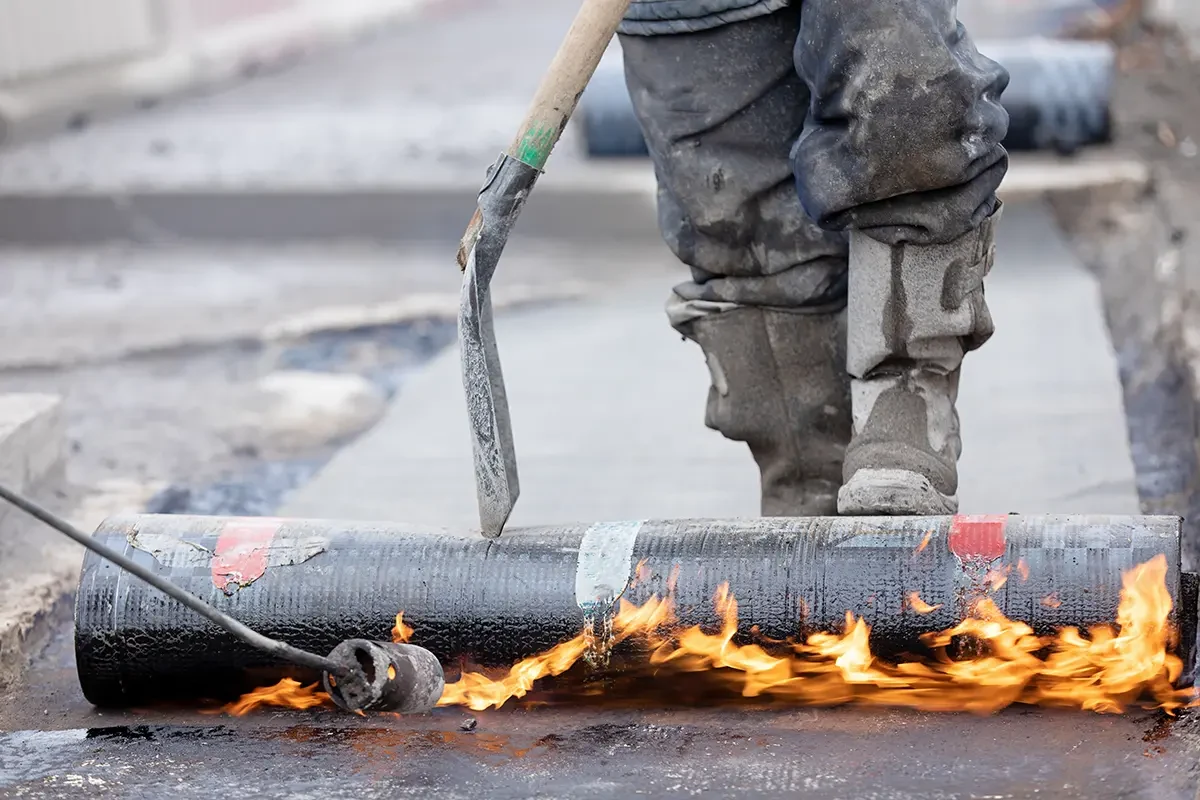
SBS modified bitumen can be installed by torch application, hot asphalt mopping, or self-adhered cold process, and the method matters for both fire safety planning and installation schedule around occupied buildings. Torch-applied installation requires strict fire watch procedures, particularly relevant on manufacturing buildings with combustible material storage nearby, while self-adhered systems reduce open-flame risk at the cost of higher material expense.
We review the building's occupancy, adjacent material storage, and any insurance carrier requirements before recommending an installation method, since some property insurers restrict torch application on buildings with certain occupancy classifications or require specific fire watch documentation regardless of contractor preference.
Low-slope drainage on aging roof decks
Many legacy manufacturing roofs carry marginal slope by modern drainage standards, since roof design practices decades ago did not always prioritize positive drainage the way current codes and best practices do. Modified bitumen's granulated cap sheet performs differently under standing water than a single-ply membrane, and we assess ponding patterns carefully before finalizing a modified bitumen specification on a roof with known drainage limitations.
Where ponding is significant, we discuss tapered insulation as part of the reroof scope rather than installing new modified bitumen over the same drainage problem that shortened the life of the previous roof.
- Existing curb heights and flashing details reviewed for compatibility with modified bitumen thickness.
- Installation method selected based on occupancy, adjacent storage, and insurer requirements.
- Fire watch procedures documented in writing for any torch-applied section.
- Ponding patterns assessed against current drainage standards before finalizing the specification.
- Tapered insulation considered where existing slope has proven inadequate.
- Cap sheet granule type and color confirmed against the building's reflectivity and warranty goals.
Ice storm cycles and cold-weather performance
The Piedmont Triad's occasional winter ice storms put a different kind of stress on modified bitumen than summer heat does. Freeze-thaw cycling at flashing details, parapet transitions, and drain bowls can work joints loose over repeated winters, particularly on older roofs where flashing was installed to a different era's standards. We inspect these transition points specifically ahead of winter weather rather than waiting for an ice-related leak to identify a weak flashing detail.
Cold-weather installation of modified bitumen also requires attention to material temperature and application technique, since asphalt-based products behave differently in cold ambient conditions than in Piedmont summer heat, and we schedule cold-season work accordingly rather than applying summer installation assumptions to a winter project.
Restoration economics versus full replacement
Not every aging modified bitumen roof needs full tear-off. Where the base and interply layers remain sound but the cap sheet has weathered, a new cap sheet installation or a fluid-applied restoration coating can extend service life at meaningfully lower cost than full replacement. We evaluate core samples and moisture scan results honestly before recommending restoration, since a coating over wet insulation only delays a more expensive repair.
For owners of multiple legacy buildings across the Triad, staging roofs by actual condition rather than age alone helps direct capital toward the roofs that need it first, instead of replacing every aging roof on the same calendar cycle.
We put that condition data in writing, building by building, so a facilities director managing several sites can defend a phased capital plan to ownership or a lender rather than relying on a general impression of which roofs look worse from the parking lot.
Questions about SBS modified bitumen roofing
Why replace a built-up roof with modified bitumen instead of single-ply?
Modified bitumen often keeps existing curb heights, flashing details, and drain configurations compatible without the modifications a switch to single-ply membrane might require.
Is torch-applied installation safe on an occupied manufacturing building?
It requires strict fire watch procedures and may be restricted by insurance carrier requirements depending on occupancy and adjacent material storage, which we review before recommending a method.
Can modified bitumen handle standing water on a low-slope roof?
Performance depends on ponding severity and duration. Where ponding is significant, we recommend addressing slope with tapered insulation rather than installing new material over the same drainage problem.
Does winter weather affect modified bitumen installation?
Yes. Cold ambient temperature changes material handling and application technique, and we schedule winter work with that difference in mind rather than using summer assumptions.
Can an aging modified bitumen roof be restored instead of replaced?
Sometimes, if base and interply layers are sound. We confirm that with core samples and moisture scanning before recommending restoration over replacement.