
Roof Systems
Silicone Roof Coatings in Winston-Salem, NC
Silicone Restoration Coatings for Aging Roofs Across the Piedmont Triad
Silicone coating extends the service life of an existing roof rather than replacing it, and for the concentration of aging industrial and institutional roofs across the Winston-Salem area, that restoration path is often the more responsible capital decision than an early tear-off. We recommend silicone coating where the underlying roof qualifies for it, and we say plainly when it does not.
What qualifies a roof for coating instead of replacement
A roof is a coating candidate when the membrane or cap sheet is structurally intact, seams are sound, and a moisture scan confirms the insulation underneath is dry. Silicone coating does not repair wet insulation, membrane shrinkage, or widespread seam failure, and applying it over those conditions only delays a more expensive repair while trapping the underlying problem. We run a moisture survey before quoting any coating project, not after the owner has already decided on the approach.
Older industrial buildings from the area's tobacco and furniture manufacturing era, many of which carry original built-up or aging EPDM roofs, are common coating candidates precisely because the roof structure has often outlasted the membrane's surface condition. Where the substrate checks out dry and sound, coating can add meaningful years of service life at a material cost well below full replacement.
Ponding water resistance compared to acrylic coatings
Silicone coating resists standing water in a way acrylic coating does not, which matters on the Triad's older low-slope roofs where drainage was not always designed to modern standards. Where a roof has a known ponding area that is not practical to correct with tapered insulation as part of the coating project, silicone is generally the appropriate coating chemistry rather than acrylic, which can soften and fail under sustained ponding.
We still document any significant ponding area in the file and discuss whether a targeted tapered insulation correction alongside the coating project would reduce ponding duration, since less standing water generally extends coating life regardless of chemistry.
Application conditions in Piedmont humidity
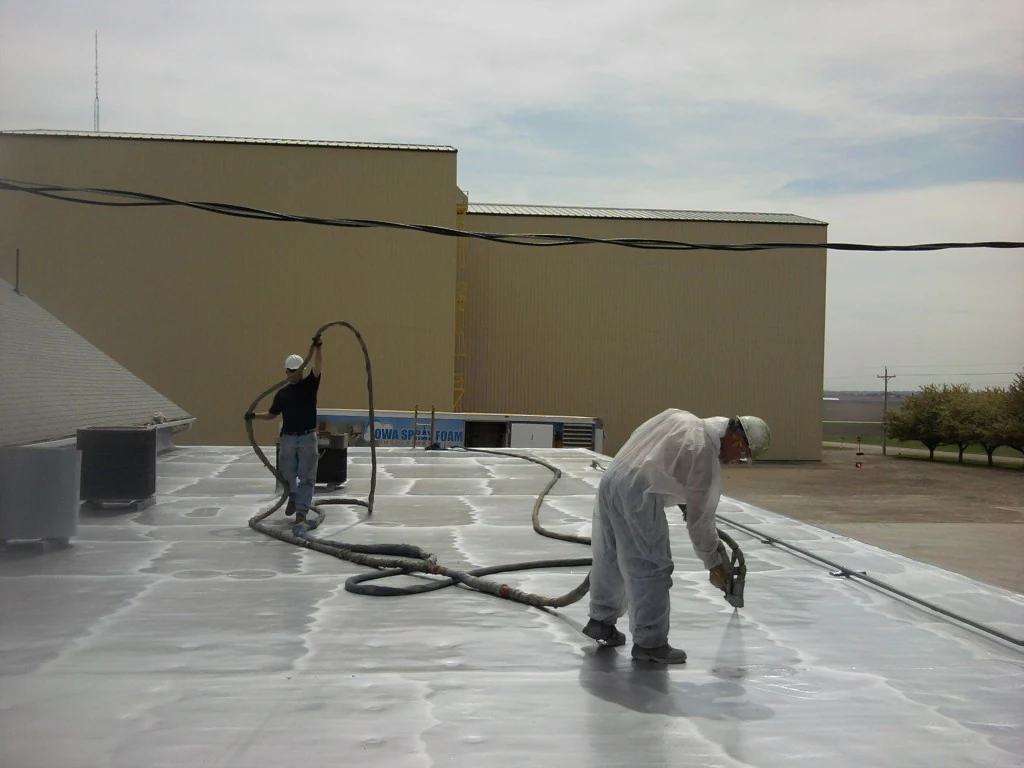
Silicone coating application is sensitive to surface moisture and dew point in the same way membrane welding is. Piedmont summer humidity can leave a roof surface damp well into the morning, and coating applied over a damp substrate can fail to bond properly even when it looks acceptable immediately after application. We monitor dew point and surface moisture before and during application rather than working to a fixed daily schedule regardless of conditions.
Coating thickness and cure time also depend on ambient humidity and temperature, and we adjust application rate and recoat windows to actual field conditions rather than a generalized manufacturer chart that assumes ideal weather.
- Moisture scan completed and documented before any coating project is quoted.
- Seam and flashing condition inspected separately from general membrane surface condition.
- Significant ponding areas identified and discussed for tapered insulation correction where practical.
- Dew point and surface moisture monitored throughout the application window.
- Coating thickness verified with wet mil gauge readings during application, not estimated afterward.
- Manufacturer recoat and maintenance interval documented in the closeout file.
Wind, UV, and ice storm durability
Silicone coating holds up well under sustained UV exposure through Piedmont summers without the embrittlement some acrylic coatings experience over time, and it retains flexibility through winter freeze-thaw cycling better than a coating chemistry not suited to broader temperature swings. Occasional ice storms across the Triad put the same freeze-thaw stress on coated roofs as on any other system, and flashing transitions remain the points we inspect most closely regardless of coating type.
Wind performance for a coated roof depends on the underlying membrane's attachment, not the coating itself, since coating is a surface treatment rather than a structural roofing system. We do not represent coating as improving wind uplift resistance beyond what the existing membrane and its attachment already provide.
Restoration economics for tobacco-era building stock
Owners of large manufacturing buildings from the area's tobacco and furniture industry era are often managing significant square footage where full tear-off replacement across the portfolio in a single capital cycle is not realistic. Silicone restoration allows staged capital planning, addressing the roofs in worst condition with replacement while extending the service life of roofs that still qualify for coating, spreading capital expense across multiple budget years rather than forcing an all-at-once decision.
We present that staged approach with honest condition assessments building by building, since recommending coating on every roof regardless of actual condition to save near-term cost creates larger problems for the owner later.
Common questions about silicone roof coating
Does silicone coating work on any roof type?
It works on roofs with sound, intact membrane and dry underlying insulation, confirmed by a moisture scan. It is not a solution for wet insulation or widespread seam failure.
Why choose silicone over acrylic coating?
Silicone resists standing water better than acrylic, which matters on older low-slope roofs where drainage does not meet modern standards.
Can coating be applied during Piedmont summer humidity?
Yes, but application timing depends on dew point and surface moisture, which we monitor throughout the process rather than working to a fixed schedule.
Does coating improve a roof's wind resistance?
No. Wind performance depends on the underlying membrane's attachment, not the coating layer, and we do not represent coating as changing that.
How long does a silicone-coated roof typically last before recoating?
Recoat intervals depend on the manufacturer's published maintenance schedule and actual field wear, which we document in the closeout file rather than estimating generally.