
Roof Systems
80-Mil TPO Roof Systems in Winston-Salem, NC
80-Mil TPO for High-Traffic Rooftops Near Kernersville and Union Cross
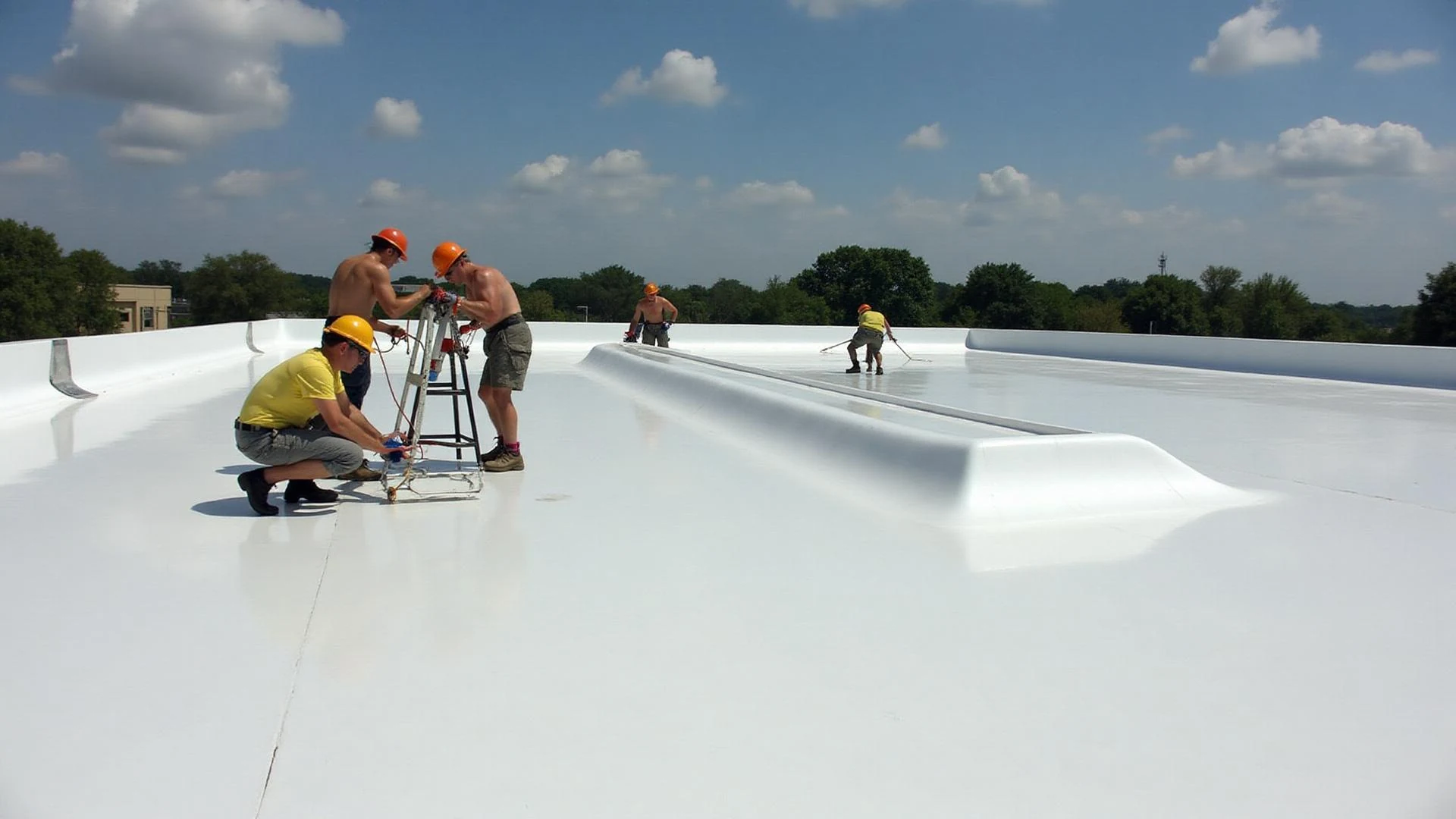
Rooftop traffic changes the roofing math faster than most owners expect. On buildings where crews are up on the roof for mechanical service several times a year, where crane picks land near the membrane, or where a facility runs continuous conveyor and dock equipment, 80-mil TPO buys the extra puncture resistance that keeps small mistakes from becoming leak calls. We specify it where the traffic pattern justifies the added material cost, not as an automatic upgrade.
Reading rooftop traffic before recommending thickness
The FedEx and Deere-Hitachi facilities along the I-40 corridor near Kernersville, and the manufacturing plants inside Union Cross Business Park, share a pattern: rooftop mechanical units that get serviced on a recurring schedule, walk pads that wear through faster than the field membrane around them, and equipment changeouts that put ladders, dollies, and replacement units directly on the roof surface. That pattern is what pushes a specification from 60-mil to 80-mil, not a general preference for a thicker membrane.
We ask for the mechanical service schedule and equipment access plan before finalizing thickness. A building with a single rooftop unit serviced twice a year does not carry the same wear profile as a distribution building with a dozen units and a technician on the roof most weeks. The membrane spec should match the actual use of the roof, not the largest number available from the manufacturer's catalog.
Puncture resistance and long-term wear at walk paths
Eighty-mil TPO carries meaningfully more reinforced thickness under a technician's boot, a dropped tool, or a dragged ladder than 60-mil sheet. On roofs where that kind of contact is routine, the extra thickness slows the rate at which small surface damage turns into a membrane breach. We still specify walk pads at fixed traffic routes and equipment platforms because thickness alone does not eliminate the need for a designated path.
Reinforcement at rooftop unit curbs, condensate line penetrations, and platform legs gets extra attention on 80-mil jobs because these are the points where repeated foot traffic concentrates stress. A membrane thickness upgrade without matching curb and penetration detailing still leaves the weakest points exposed.
Storm resilience for hail and thunderstorm debris
The Piedmont Triad's severe weather season brings hail embedded in fast-moving thunderstorm cells, along with wind-driven debris that can strike a membrane surface at an angle rather than falling straight down. Eighty-mil TPO's added thickness provides a meaningful margin against small hail and debris impact compared to thinner membrane, though no single-ply system is marketed as hail-proof, and we do not present it that way.
After a documented hail or wind event, we walk the roof specifically looking for membrane bruising, granule displacement on adjacent metal components, and dislodged mechanical fasteners, because impact damage on TPO is not always visible from the ground or through a casual walk-through.
- Rooftop mechanical service frequency documented before thickness is specified.
- Walk pads placed at every recurring traffic route and equipment platform.
- Curb, penetration, and platform-leg reinforcement detailed separately from field membrane.
- Post-storm inspection checklist covers membrane bruising and fastener displacement.
- Crane and lift access points identified and protected during equipment changeouts.
- Wind uplift fastening pattern calculated to the building's exposure category.
Deck and insulation considerations for industrial buildings
Manufacturing buildings around Union Cross and Kernersville often carry steel deck with varying insulation histories, including sections replaced piecemeal over past decades. Before specifying 80-mil TPO over an existing assembly, we confirm deck attachment adequacy and insulation condition, because a heavier membrane over a compromised deck does not solve an underlying structural question.
Where insulation has been patched with mismatched R-values over time, we flag that in the specification rather than assuming uniform thermal performance across the roof. Procurement teams reviewing energy code compliance for a reroof project need that information documented, not discovered after the membrane is installed.
Warranty scope for high-traffic installations
Manufacturer warranty programs for 80-mil TPO typically account for expected foot traffic differently than programs written for low-traffic roofs, and the closeout documentation should reflect the actual use case. We record equipment locations, walk pad placement, and access routes as part of the warranty submission so the coverage matches how the roof will actually be used, not a generic low-traffic assumption.
Owners managing several industrial buildings across the Triad often standardize on 80-mil for any roof with recurring mechanical access, which simplifies future maintenance planning even where the immediate roof might have qualified for a lighter specification.
Common questions about 80-mil TPO specifications
When does a roof actually need 80-mil instead of 60-mil?
The deciding factor is rooftop traffic, not roof size. Buildings with frequent mechanical service, crane access, or routine equipment changeouts are where the extra thickness earns its cost.
Does 80-mil TPO eliminate the need for walk pads?
No. Thickness reduces puncture risk but does not replace designated traffic routes at recurring access points, curbs, and platforms.
Is 80-mil TPO hail-resistant?
It carries a meaningful thickness advantage over thinner membrane, but no single-ply system is marketed as hail-proof, and we do not represent it that way to owners.
Can 80-mil TPO go over an aging insulation assembly with mismatched R-values?
Only after the deck attachment and insulation condition are confirmed. Patched thermal history gets documented in the specification rather than assumed uniform.
Does thicker membrane change the warranty terms?
Manufacturer programs account for traffic use differently, and we document equipment locations and access routes as part of the warranty submission so coverage matches actual roof use.