
Commercial Roofing Services
Modified Bitumen Roofing in Winston-Salem, NC
Modified Bitumen Systems for Winston-Salem Low-Slope Roofs
Modified bitumen remains a common specification on older institutional and multi-tenant buildings across Winston-Salem, particularly where a multi-ply redundant system is preferred over a single-ply membrane, or where an existing modified bitumen roof's maintenance history makes staying within that system the more defensible choice. We install SBS and APP formulations depending on application method and building requirements.
SBS vs. APP Modified Bitumen
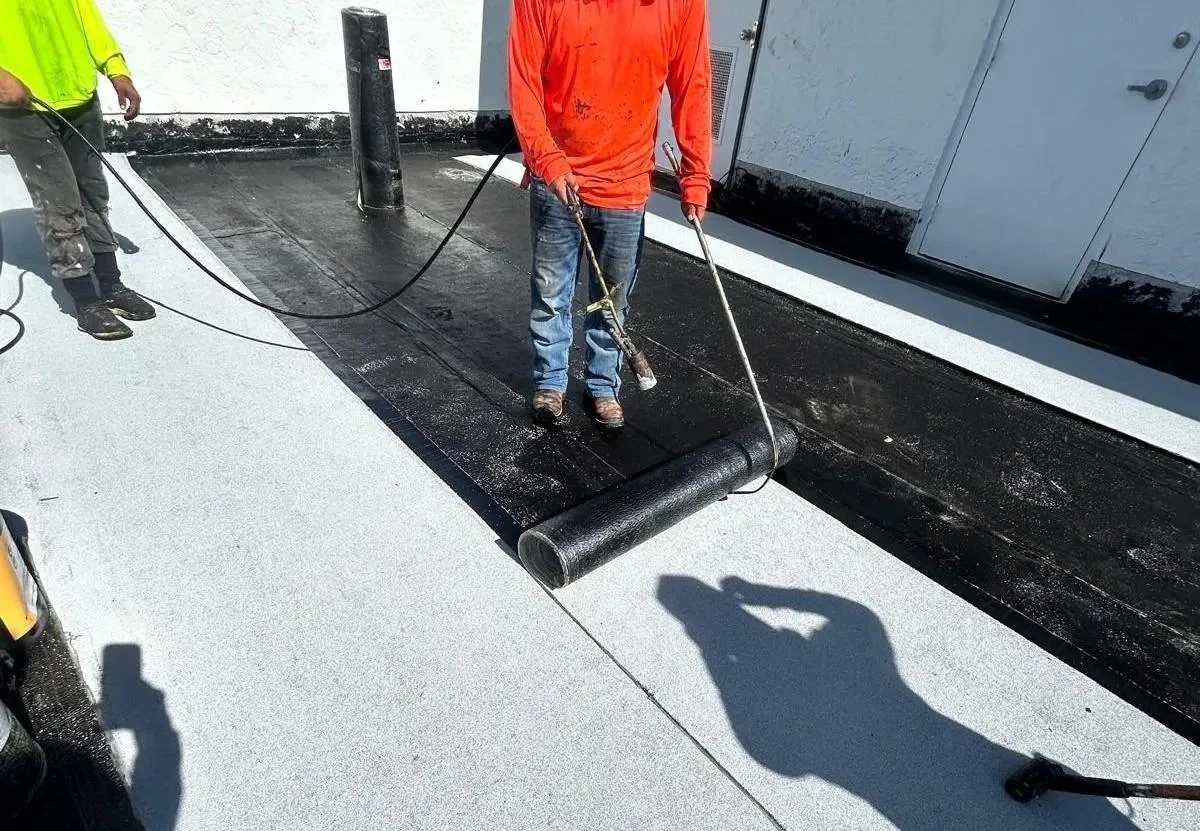
SBS-modified bitumen behaves more like rubber, with better flexibility across temperature swings, and is typically installed with cold adhesive, self-adhered sheets, or torch application. APP-modified bitumen behaves more like plastic, with better resistance to UV degradation in exposed cap sheets, and is almost always torch-applied. We specify one or the other based on the building's roof geometry, deck type, and whether an open-flame application method is workable given the building's occupancy and fire code requirements.
Torch application isn't viable on every building. Occupied structures with sensitive interior operations, buildings near combustible storage, or roofs with tight clearance to adjacent structures often call for cold-applied or self-adhered systems instead, and we make that determination before proposing a torch-down scope.
Multi-Ply Redundancy and Where It Matters
A modified bitumen system typically runs two or three plies rather than a single membrane sheet, which builds in redundancy that a single-ply system doesn't have by design. On institutional buildings where a roof failure has outsized consequences, aging structures where deck condition is a known variable, or buildings with a documented history of ponding, that redundancy is worth the added material and labor cost over a single-ply alternative.
- Ply count and application method selected for building geometry and occupancy
- SBS or APP formulation matched to flexibility and UV exposure requirements
- Torch, cold-adhesive, or self-adhered method confirmed against fire code and clearance
- Base sheet, interply, and cap sheet detailed as one documented assembly
- Flashing and penetration detail brought current to manufacturer standard
- Warranty tier confirmed against full assembly compliance
Freeze-Thaw and Ponding Performance
Winston-Salem winters bring freeze-thaw cycling and occasional ice events that stress any low-slope membrane at seams and flashings, and modified bitumen's multi-ply construction handles that cycling well when installed with correct overlap and adhesion at seams. Ponding water, which shows up on roofs with inadequate slope to drain or clogged drainage, is a more common failure driver than cold weather on most of the modified bitumen roofs we inspect, so drainage condition is part of every scope we write.
Where We See Modified Bitumen Specified
Older institutional buildings, some downtown Winston-Salem properties adjacent to the historic core, and manufacturing buildings with a documented modified bitumen roofing history are the most common candidates for new modified bitumen work in this market. On buildings originally built with a different system, we'll typically recommend against introducing modified bitumen unless there's a specific reason, since mixing membrane families at flashings and transitions adds a compatibility variable we'd rather avoid.
Cap Sheet and Surfacing Options
Beyond gravel ballast, modified bitumen cap sheets are available with factory-applied mineral granule surfacing in a range of colors, which gives a building owner an appearance option closer to what a standing seam accent roof provides on an adjacent structure, without carrying gravel's dead load. Granule-surfaced cap sheets also come in algae-resistant formulations, which is a relevant consideration given the humidity this region holds through summer and early fall, when algae growth on a north-facing or shaded slope can affect appearance faster than it affects actual performance.
We specify surfacing type based on the building's appearance requirements alongside its performance needs, since a highly visible modified bitumen roof, on a downtown building for instance, sometimes justifies the added cost of a granule finish that a low-visibility industrial roof wouldn't need.
Warranty Structure for Modified Bitumen
Warranty tiers on modified bitumen follow the same material-only, system, or no-dollar-limit structure as single-ply systems, with the added variable that ply count and application method both factor into which tier a given assembly qualifies for. We document ply count, formulation, and application method in the proposal so the warranty tier isn't a surprise at closeout.
Base Sheet Attachment and Deck Compatibility
The base ply of a modified bitumen system has to be mechanically attached, adhered, or torched to the deck in a method compatible with what the deck is made of, and that first attachment decision constrains everything installed above it. Steel deck, poured concrete, and wood deck each call for a different base sheet attachment approach, and getting that first ply wrong, using a fastening pattern designed for one deck type on another, is a common source of early system failure that shows up as blistering or delamination well before the membrane's expected service life.
Common Questions on Modified Bitumen Roofing
What's the difference between SBS and APP modified bitumen?
SBS is more rubber-like and flexible across temperature swings; APP is more plastic-like with better UV resistance in exposed cap sheets. We choose based on building geometry and application method.
Is torch application safe on every building?
No. We assess fire code requirements, building occupancy, and clearance to adjacent structures before proposing torch application, and use cold-adhesive or self-adhered methods where torch-down isn't appropriate.
Why would a building choose modified bitumen over a single-ply membrane?
Multi-ply redundancy is the main reason, particularly on institutional buildings or roofs with a documented ponding or deck-condition history where a backup layer matters.
How does modified bitumen handle Winston-Salem winters?
The multi-ply construction handles freeze-thaw cycling well when seams and flashings are correctly installed; ponding water is usually the bigger performance risk than cold weather.
What warranty comes with a modified bitumen installation?
Warranty tier depends on ply count, formulation, and application method matching the manufacturer's current specification, confirmed in writing before the contract is signed.