
Commercial Project Types
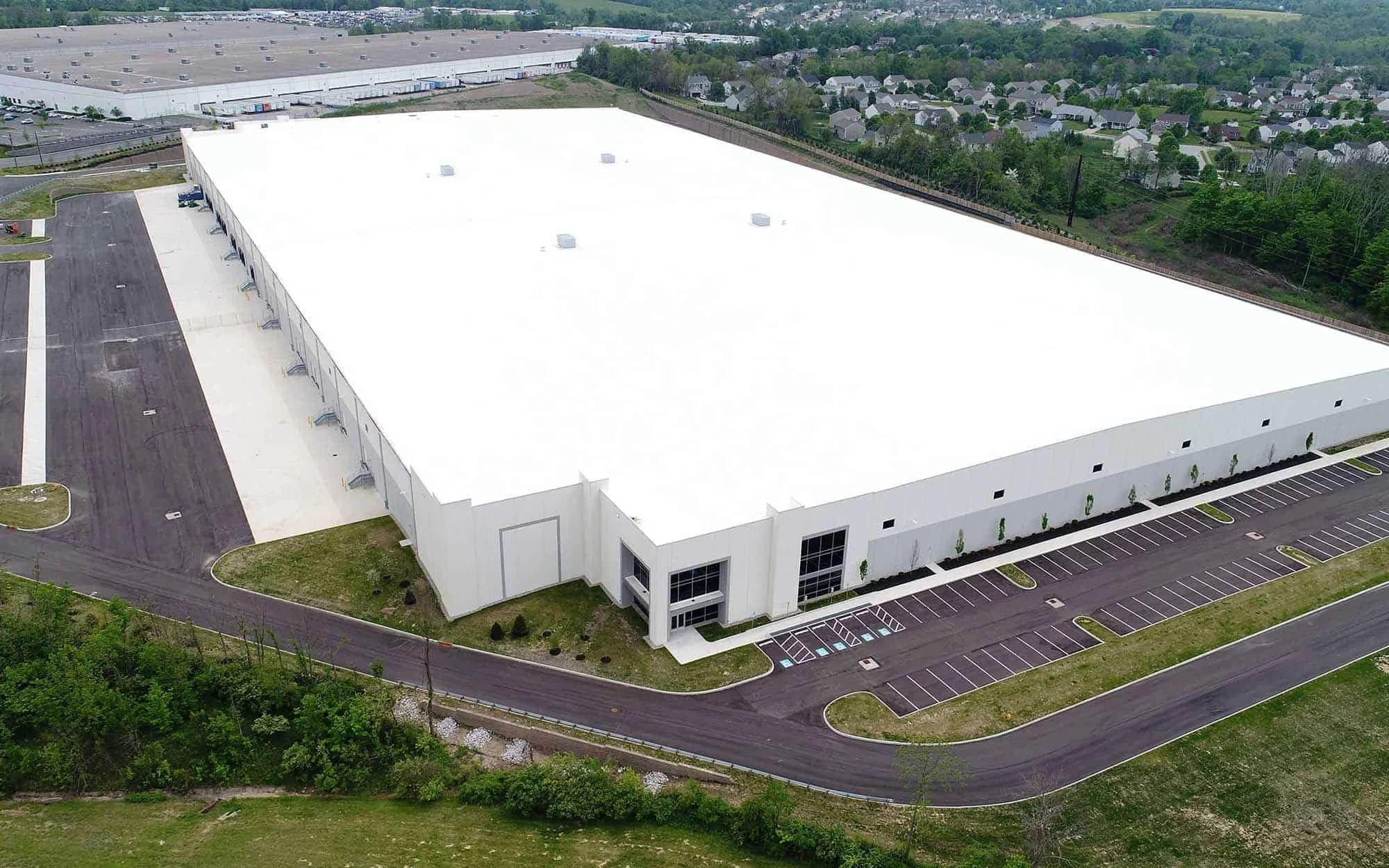
Distribution Center Roofing in Winston-Salem, NC
Roofing Distribution Centers Along the Kernersville Logistics Corridor
The Kernersville corridor carries a cluster of large cross-dock and fulfillment buildings feeding off I-40, including operations like the FedEx ground hub and the furniture distribution centers around Thomasville and Advance. These buildings run closer to continuous operation than almost any other commercial building type in the Triad, and the roof project has to fit inside that operating rhythm rather than the other way around.
Cross-Dock Roof Geometry and Drainage
Cross-dock distribution buildings have a distinct roof geometry, long, narrow rectangular footprints with dock doors running the full length of two opposing sides, and internal drainage systems that have to move a lot of water off a roof with limited perimeter length relative to its total area. We survey the existing drainage plan against actual ponding patterns before designing any tapered insulation package, since these buildings tend to run internal drains at tighter spacing than a typical warehouse and a single clogged or undersized drain can create a ponding problem across a much larger roof section than it would on a smaller building.
Roof access for these buildings is usually concentrated near mechanical penthouse areas rather than spread evenly across the field, and we plan material staging and hoisting to avoid conflicting with the dock door traffic that runs continuously along both long sides of the building.
Racking, Skylights, and Roof Penetration Coordination
High-bay racking inside a distribution center changes the sprinkler and roof penetration picture in ways that matter directly to roof design. ESFR sprinkler heads and their required clearance from racking tops dictate where roof drains and any new penetrations can land, and ESFR systems in particular are unforgiving about obstructions in their discharge pattern. We confirm current racking height and ESFR layout with the facility's fire protection engineer before finalizing any new roof penetration location, rather than relying on the building's original as-built drawings, which rarely match the racking configuration in place today after multiple tenant changes.
- Drainage survey matched to cross-dock roof geometry before tapered design
- ESFR sprinkler clearance confirmed before any new penetration is located
- Racking height verification against current facility layout, not original as-builts
- Night-shift and dock-door coordination for material staging and hoisting
- FM Global RoofNav verification for the specific assembly and fastening pattern
- Skylight evaluation separate from field membrane condition
- Warranty term sized to the logistics operator's facility ownership horizon
24/7 Operations and Night-Shift Scheduling
Many distribution centers along this corridor run three shifts or close to it, with trucks docking around the clock. We sequence roof sections to avoid working directly above active dock doors during peak loading windows, and we coordinate with the facility's operations manager on shift patterns before finalizing a schedule, since a distribution center's busiest hours don't always match the daytime assumption a standard construction schedule defaults to.
Seasonal peak periods add another layer to that scheduling conversation. Facilities tied to furniture distribution or general retail fulfillment often run a compressed peak season ahead of major holidays, and we plan larger reroofing phases outside that window wherever the facility's operations calendar allows it, reserving the peak weeks for minor repair or emergency response only.
FM Global Loss Prevention Specs for Distribution Buildings
Large logistics operators overwhelmingly carry FM Global coverage on distribution facilities, and FM's loss prevention data sheets for these building types are specific about roof assembly, insulation combustibility, and fastening density given the fire load a fully racked warehouse represents underneath. We check the current FM RoofNav listing against the specified assembly before ordering material and confirm that any skylight or smoke vent addition carries a compatible FM rating, since a mismatched component here can affect the building's entire insurance classification and not only its roof warranty.
Warranty Terms for Big-Box Logistics Owners
Distribution center ownership ranges from single-tenant build-to-suit facilities held long-term by the operating company to speculative buildings traded between institutional logistics REITs on a shorter cycle. We size the warranty term to match, a 20-year NDL warranty for an owner-operator planning to hold the building for decades, or a shorter term aligned with a REIT's typical hold period where that's the more realistic fit. Closeout documentation includes as-built roof plans, FM compliance records, and product data sheets formatted for the facility's asset management system.
Common Questions From Distribution Center Facilities Managers
Can roof work happen without shutting down dock operations?
Yes. We sequence roof sections to avoid working directly above active dock doors during peak loading windows and coordinate scheduling with your operations manager's shift pattern.
Does high-bay racking affect where roof penetrations can go?
Yes, particularly with ESFR sprinkler systems, which require specific clearance from racking. We confirm current racking height and layout before locating any new penetration.
How do you verify our roof assembly meets FM Global requirements?
We check the current FM RoofNav listing for the exact assembly, insulation, and fastening pattern specified, rather than assuming a generically FM-approved system automatically fits this building's classification.
What warranty term is typical for a distribution center we plan to hold long-term?
Most owner-operators planning a long hold select a 20-year No Dollar Limit warranty on TPO systems. REIT-owned buildings sometimes use a shorter term matched to the expected hold period.
Do skylights on our building need separate evaluation from the roof membrane?
Yes. Skylights are a common and distinct leak source on distribution buildings, and we evaluate them separately during any roof condition assessment.