
Industries We Serve
Retail Chain Roofing in Winston-Salem, NC
Keeping the Roof Work Off Your Sales Floor Hours
A regional facilities manager for a retail chain rarely asks us to fix one roof. The question is usually how a repair or reroof gets done at a store near Hanes Mall, another off Stratford Road, and a third out at a Kernersville outlet center, without any of them closing during business hours or breaking a lease agreement with the landlord. That's the version of this work we're set up for, and it's a different scheduling problem than a single free-standing building where closing for a day barely registers.
Store Hours Drive the Schedule
Retail roof work happens overnight or before opening, not during store hours, and we plan crew size and material staging around that constraint rather than treating it as an inconvenience to work around. A tear-off and dry-in sequence gets broken into sections small enough to close completely before customers arrive, even on a big-box roof where a full section replacement would otherwise take days from tear-off to finished membrane.
Loading dock access, parking lot staging, and customer entrance routes all get mapped before a crew shows up, since a retail site has none of the laydown space an industrial site takes for granted.
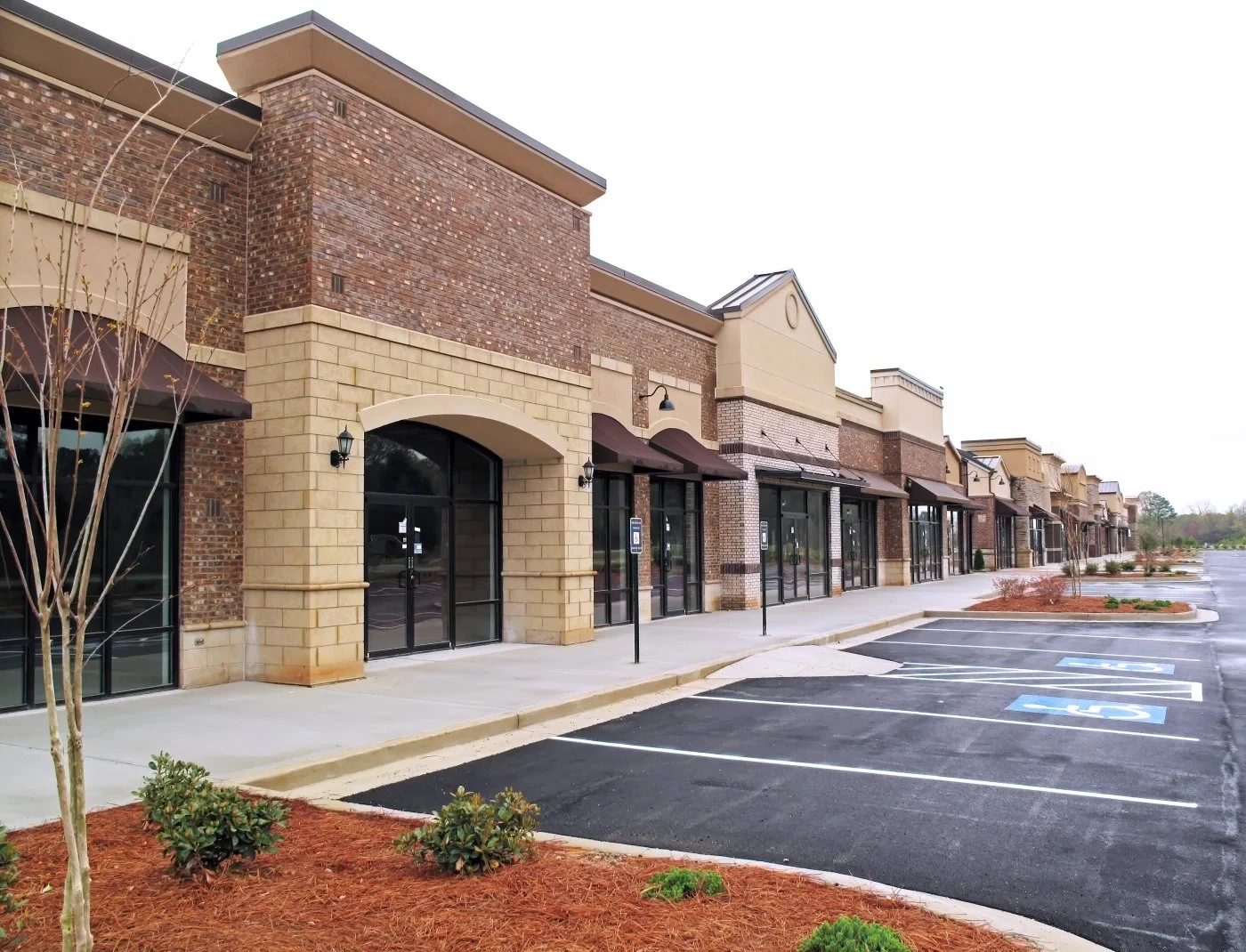
Delivery trucks still need dock access during roof work, and a strip center's shared parking lot means our staging plan has to account for neighboring tenants who have nothing to do with the roof project but everything to do with whether customers can park near the entrance that week.
NNN Leases and Landlord Responsibility
Most retail chain locations sit inside a triple-net lease, and roof responsibility between tenant and landlord is often split in ways that are not obvious from a maintenance request alone. We document our findings in a way a facilities manager can hand directly to a landlord or property manager to establish whether a repair falls under tenant maintenance or landlord capital responsibility, rather than leaving that argument for someone else to sort out after the work is already done.
Where a landlord controls the roof but a store is reporting leaks affecting merchandise or fixtures, we provide documentation the tenant's facilities team can use to escalate the request with specifics instead of a general complaint.
We keep that documentation organized by store number and lease reference where a chain's real estate department tracks properties that way, so a regional manager isn't translating our report into their own internal system before it can be used in a landlord conversation.
Consistent Specs Across Every Location
A chain with a defined prototype wants the same roof performance at every store, regardless of which local contractor happens to get the call. We work from whatever roof spec or approved manufacturer list a chain's corporate real estate or facilities department has standardized on, so a store in this market gets the same membrane, warranty tier, and detailing as one built to the same prototype elsewhere.
Where a chain hasn't standardized a spec yet, or is updating an older prototype, we can document what's currently installed across a handful of local stores as a starting point for that conversation.
Weather exposure across this market is fairly uniform from store to store, which makes standardization easier than it would be for a chain spread across very different climates. A membrane and warranty tier chosen for hail and summer UV exposure at a Kernersville location holds up about the same at a store near Hanes Mall or out toward High Point.
What a Multi-Location Assessment Covers
A single visit report doesn't tell a regional facilities manager much on its own. Our multi-location assessments include:
- Roof age, membrane type, and condition for each store in the market
- Landlord versus tenant responsibility notes based on lease-relevant findings
- A prioritized list of which locations need attention first
- Photo documentation formatted for a corporate real estate or facilities file
- Budgetary pricing broken out by store so decisions can be made location by location
Brand Appearance and Storefront Visibility
Some retail roof problems show up where customers can see them, well beyond where facilities teams typically look for leaks: sagging parapet caps, streaked coping, or a visible patch near a storefront sign band all affect how a store presents itself. We address those visible conditions as part of the scope rather than treating cosmetic roofline issues as a separate, lower-priority item, since a chain's brand standards usually cover exterior appearance as closely as interior operations.
Questions Retail Facilities Managers Ask Us
Can you complete roof work without closing the store?
Yes, we schedule around store hours and section the work so each area is closed in before opening, even on larger big-box roofs.
How do you handle roofs where the landlord controls repairs?
We document findings in a format that supports a clear tenant-versus-landlord responsibility conversation, based on the lease-relevant condition of the roof rather than a general complaint.
Can you work from our corporate roof spec?
We work from whatever approved manufacturer list or spec a chain has standardized on, so every store gets the same membrane and warranty tier regardless of location.
Do you provide a report we can use across multiple stores?
Our multi-location assessments cover every store in a market with consistent formatting, so a regional manager can compare and prioritize locations side by side.
Do you address visible roofline issues beyond just leaks?
We include parapet, coping, and storefront-visible conditions in our scope, since those affect brand appearance as much as any interior leak does.